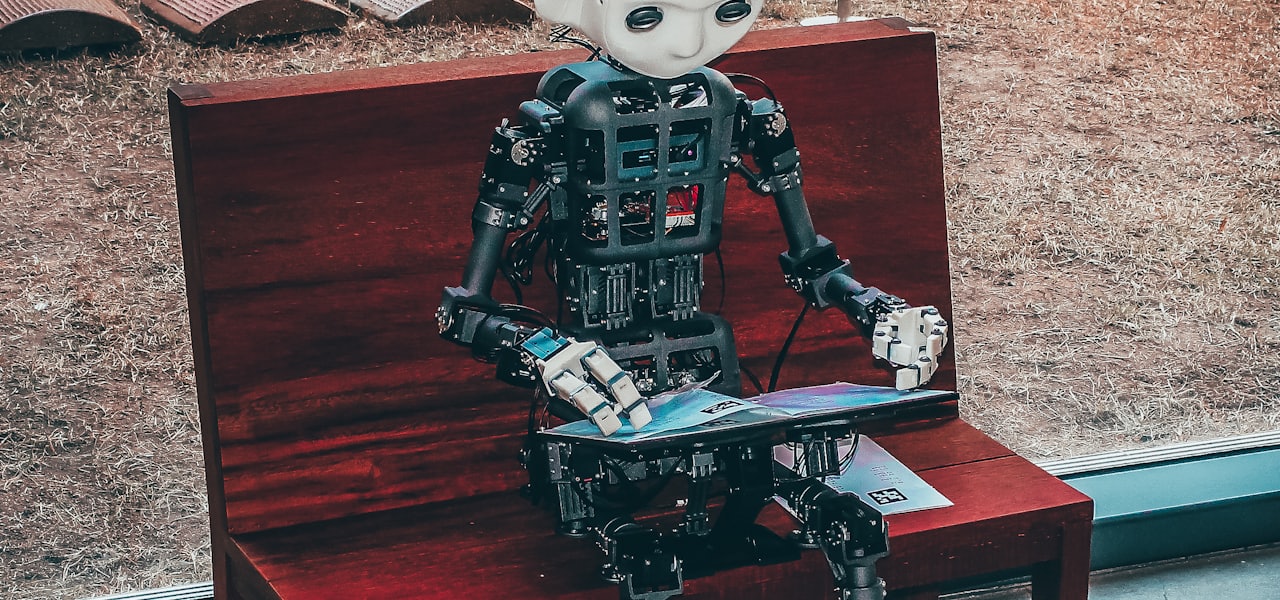
Screenless video is any system for transmitting visual information from a video source without the use of a screen. Screenless computing systems can be divided into three groups: Visual Image, Retinal Direct, and Synaptic Interface. == Visual image == Visual Image screenless display includes any image that the eye can perceive. The most common example of Visual Image screenless display is a hologram. In these cases, light is reflected off some intermediate object (hologram, LCD panel, or cockpit window) before it reaches the retina. In the case of LCD panels the light is refracted from the back of the panel, but is nonetheless a reflected source. Google has proposed a similar system to replace the screens of tablet computers and smartphones. == Retinal display == Virtual retinal display systems are a class of screenless displays in which images are projected directly onto the retina. They are distinguished from visual image systems because light is not reflected from some intermediate object onto the retina, it is instead projected directly onto the retina. Retinal Direct systems, once marketed, hold out the promise of extreme privacy when computing work is done in public places because most snooping relies on viewing the same light as the person who is legitimately viewing the screen, and retinal direct systems send light only into the pupils of their intended viewer. == Synaptic interface == Synaptic Interface screenless video does not use light at all. Visual information completely bypasses the eye and is transmitted directly to the brain. While such systems have only been implemented in humans in rudimentary form - for example, displaying single Braille characters to blind people – success has been achieved in sampling usable video signals from the biological eyes of a living horseshoe crab through their optic nerves, and in sending video signals from electronic cameras into the creatures' brains using the same method.
Neighborhood operation
In computer vision and image processing a neighborhood operation is a commonly used class of computations on image data which implies that it is processed according to the following pseudo code: Visit each point p in the image data and do { N = a neighborhood or region of the image data around the point p result(p) = f(N) } This general procedure can be applied to image data of arbitrary dimensionality. Also, the image data on which the operation is applied does not have to be defined in terms of intensity or color, it can be any type of information which is organized as a function of spatial (and possibly temporal) variables in p. The result of applying a neighborhood operation on an image is again something which can be interpreted as an image, it has the same dimension as the original data. The value at each image point, however, does not have to be directly related to intensity or color. Instead it is an element in the range of the function f, which can be of arbitrary type. Normally the neighborhood N is of fixed size and is a square (or a cube, depending on the dimensionality of the image data) centered on the point p. Also the function f is fixed, but may in some cases have parameters which can vary with p, see below. In the simplest case, the neighborhood N may be only a single point. This type of operation is often referred to as a point-wise operation. == Examples == The most common examples of a neighborhood operation use a fixed function f which in addition is linear, that is, the computation consists of a linear shift invariant operation. In this case, the neighborhood operation corresponds to the convolution operation. A typical example is convolution with a low-pass filter, where the result can be interpreted in terms of local averages of the image data around each image point. Other examples are computation of local derivatives of the image data. It is also rather common to use a fixed but non-linear function f. This includes median filtering, and computation of local variances. The Nagao-Matsuyama filter is an example of a complex local neighbourhood operation that uses variance as an indicator of the uniformity within a pixel group. The result is similar to a convolution with a low-pass filter with the added effect of preserving sharp edges. There is also a class of neighborhood operations in which the function f has additional parameters which can vary with p: Visit each point p in the image data and do { N = a neighborhood or region of the image data around the point p result(p) = f(N, parameters(p)) } This implies that the result is not shift invariant. Examples are adaptive Wiener filters. == Implementation aspects == The pseudo code given above suggests that a neighborhood operation is implemented in terms of an outer loop over all image points. However, since the results are independent, the image points can be visited in arbitrary order, or can even be processed in parallel. Furthermore, in the case of linear shift-invariant operations, the computation of f at each point implies a summation of products between the image data and the filter coefficients. The implementation of this neighborhood operation can then be made by having the summation loop outside the loop over all image points. An important issue related to neighborhood operation is how to deal with the fact that the neighborhood N becomes more or less undefined for points p close to the edge or border of the image data. Several strategies have been proposed: Compute result only for points p for which the corresponding neighborhood is well-defined. This implies that the output image will be somewhat smaller than the input image. Zero padding: Extend the input image sufficiently by adding extra points outside the original image which are set to zero. The loops over the image points described above visit only the original image points. Border extension: Extend the input image sufficiently by adding extra points outside the original image which are set to the image value at the closest image point. The loops over the image points described above visit only the original image points. Mirror extension: Extend the image sufficiently much by mirroring the image at the image boundaries. This method is less sensitive to local variations at the image boundary than border extension. Wrapping: The image is tiled, so that going off one edge wraps around to the opposite side of the image. This method assumes that the image is largely homogeneous, for example a stochastic image texture without large textons.
Industry Dive
Industry Dive is a United States-based business-to-business news organization with an estimated 18 million readers in more than 25 industries, such as banking and waste management. Since 2022, it has been owned by Informa plc. Industry Dive aims to serve business executives who read news on their mobile phones. The company had an estimated revenue of more than of more than $110 million in 2023. As of 2020, it has more than 300 employees, including 80 journalists and 12 engineers. Its headquarters is in Washington, D.C. == History == Industry Dive was formed in 2012 by Sean Griffey (president), Eli Dickinson (chief technology officer), and Ryan Willumson (chief revenue officer). It was funded with $900,000 from private investors in 2012 and 2013. The company covered five industries: construction, education, marketing, utility, and waste. In 2016, it began its Dive Awards. Industry Dive's revenues quadrupled from 2015 to 2018, putting it in the top half of the Deloitte Technology Fast 500 and the top 20 percent of the Inc. Top 5000 list. In 2019, Falfurrias Capital Partners acquired a majority stake in the company. ID's content marketing clients included IBM, Siemens, and UPS. In 2020, DCA Live named Industry Dive to its "Red Hot Companies" list, which recognizes the D.C. area's 'fastest-growing' companies. In the same year, Industry Dive acquired CFO. In 2021, Industry Dive acquired PharmaVOICE. In 2022, it was purchased by Informa plc, which bought its majority stake from Falfurrias Capital Partners for about $530 million. == Publications == Industry Dive provides news coverage of a variety of industries including agriculture, banking, construction, education, fashion, healthcare, and manufacturing, each using a different website: == Awards == Industry Dive publications have received several national and regional Awards of Excellence from the American Society of Business Publication Editors, including for a series of 2020 articles about Big Pharma and the race for the coronavirus vaccine. The Washington Post recognized Industry Dive as a top place to work for four consecutive years, from 2016 to 2020.
Digital redlining
Digital redlining is the practice of creating and perpetuating inequities between already marginalized groups specifically through the use of digital technologies, digital content, and the internet. The concept of digital redlining is an extension of the practice of redlining in housing discrimination, a historical legal practice in the United States and Canada dating back to the 1930s where red lines were drawn on maps to indicate poor and primarily black neighborhoods that were deemed unsuitable for loans or further development, which created great economic disparities between neighborhoods. The term was popularized by Dr. Chris Gilliard, a privacy scholar, who defines digital redlining as "the creation and maintenance of tech practices, policies, pedagogies, and investment decisions that enforce class boundaries and discriminate against specific groups". Though digital redlining is related to the digital divide and techniques such as weblining and personalization, it is distinct from these concepts as part of larger complex systemic issues. It can refer to practices that create inequities of access to technology services in geographical areas, such as when internet service providers decide to not service specific geographic areas because they are perceived to be not as profitable and thus reduce access to crucial services and civic participation. It can also be used to refer to inequities caused by the policies and practices of digital technologies. For instance, with these methods inequities are accomplished through divisions that are created via algorithms which are hidden from the technology user; the use of big data and analytics allow for a much more nuanced form of discrimination that can target specific vulnerable populations. These algorithmic means are enabled through the use of unregulated data technologies that apply a score to individuals that statistically categorize personality traits or tendencies which are similar to a credit score but are proprietary to the technology companies and not under outside oversight. == Digital redlining and geography == While the roots of redlining lie in excluding populations based on geography, digital redlining occurs in both geographical and non-geographical contexts. An example of both contexts can be found in the charges brought against Facebook on March 28 of 2019, by the United States Department of Housing and Urban Development (HUD). HUD charged Facebook with violating the Fair Housing Act of 1968 by "encouraging, enabling, and causing housing discrimination through the company's advertising platform." HUD stated that Facebook allowed advertisers to “exclude people who live in a specified area from seeing an ad by drawing a red line around that area.” The discrimination called out by HUD included those that were racist, homophobic, ableist, and classist. Besides this example of geographically based digital redlining, HUD also charged that Facebook used profile information and designations to exclude classes of people. The charges stated: "Facebook enabled advertisers to exclude people whom Facebook classified as parents; non-American-born; non-Christian; interested in accessibility; interested in Hispanic culture; or a wide variety of other interests that closely align with the Fair Housing Act’s protected classes" Several media outlets pointed out HUDs own history of housing discrimination through redlining, the establishment of the Fair Housing Act to combat redlining, and how the digital platform was recreating this discriminatory practice. === Digital redlining within a geographical context === Although digital redlining refers to a complex and varied set of practices, it has been most commonly applied to practices with a geographical dimension. Common examples include when an internet service providers decide to not service specific geographic areas because those areas are seen to be not as profitable, resulting in discrimination against low-income communities, with resulting impacts on access to crucial services and civic participation. AT&T has faced specific scrutiny for this form of digital redlining, it has been reported that AT&T has been classist in its offerings of broadband internet service in areas that are more impoverished. Geographically based digital redlining can also apply to digital content or the distribution of goods sold online. Geographically based games such as Pokémon Go have been shown to offer more virtual stops and rewards in geographic areas that are less ethnically and racially diverse. In 2016, Amazon was rebuked for not offering their Prime same-day delivery service to many communities that were largely African American and had incomes that were beneath the national average. Even services such as email can be impacted, with many email administrators creating filters for flagging particular email messages as spam based on the geographical origin of the message. === Digital redlining based on personal identity === Although often aligned with discrimination that falls into a geographically based context digital redlining also refers to when vulnerable populations are targeted for or excluded from specific content or access to the internet in a way that harms them based on some aspect of their identity. Trade schools and community colleges, which typically have a more working class student body, have been found to block public internet content from their students where elite research institutions do not. The use of big data and analytics allow for a much more nuanced form of discrimination that can target specific vulnerable populations. For example, Facebook has been criticized for providing tools that allow advertisers to target ads by ethnic affinity and gender, effectively blocking minorities from seeing specific ads for housing and employment. In October 2019, a major class action lawsuit was filed against Facebook alleging gender and age discrimination in financial advertising. A broad array of consumers can be particularly vulnerable to digital redlining when it is used outside of a geographical context. Besides targeting vulnerable populations based on traditional and legally recognized classifications such as race, gender, age, etc., it has been shown that personal data mined and then resold by brokers can be used to target those who have been identified as suffering from Alzheimer's or dementia, or simply identified as impulse buyers or gullible. == Term distinctions == === Distinctions between weblining and digital redlining === Earlier distinctions have been made between weblining—the process of charging customers different prices based on profile information --- and internet or digital redlining, with digital redlining being focused not on pricing but access. As early as 2002 the Gale Encyclopedia of E-Commerce puts forth the distinction more in use today: weblining is the pervasive and generally accepted (or at least tolerated) practice of personalizing access to products and services in ways invisible to the user; digital redlining is when such personalized, data-driven schemes perpetuate traditional advantages of privileged demographics. As weblining has become more ubiquitous, the term has fallen out of use in favor of the more general term personalization. === Distinctions between the digital divide and digital redlining === Scholars have often drawn connections between the digital divide and digital redlining. In practice, the digital divide is seen as one of a number of impacts of digital redlining, and digital redlining is one of a number of ways in which the divide is maintained or extended. == Criticisms == A 2001 report looked to find if the reason for a gap in access to broadband internet by low-income and minority populations was due to a lack of availability or due to other factors. The report found that there was "little evidence of digital redlining based on income or black or Hispanic concentrations" but that there was mixed evidence of redlining based on areas in which Native American or Asian populations were larger.
Microelectronics
Microelectronics is a subfield of electronics. As the name suggests, microelectronics relates to the study and manufacture (or microfabrication) of very small electronic designs and components. Usually, but not always, this means micrometre-scale or smaller. These devices are typically made from semiconductor materials. Many components of a normal electronic design are available in a microelectronic equivalent. These include transistors, capacitors, inductors, resistors, diodes and (naturally) insulators and conductors can all be found in microelectronic devices. Unique wiring techniques such as wire bonding are also often used in microelectronics because of the unusually small size of the components, leads and pads. This technique requires specialized equipment and is expensive. Digital integrated circuits (ICs) consist of billions of transistors, resistors, diodes, and capacitors. Analog circuits commonly contain resistors and capacitors as well. Inductors are used in some high frequency analog circuits, but tend to occupy larger chip area due to their lower reactance at low frequencies. Gyrators can replace them in many applications. As techniques have improved, the scale of microelectronic components has continued to decrease. At smaller scales, the relative impact of intrinsic circuit properties, such as unintended interactions between components or their parts, may become more significant. These are called parasitic effects, and the goal of the microelectronics design engineer is to find ways to compensate for or to minimize these effects, while delivering smaller, faster, and cheaper devices. Today, microelectronics design is largely aided by electronic design automation (EDA) software.
You.com
You.com is an artificial intelligence search startup that has pivoted away from consumer search engine operations toward business-focused AI tools and APIs. The company was founded in 2020 by Richard Socher, the former chief scientist at Salesforce, and Bryan McCann, a former NLP researcher at Salesforce. == History == Following its 2020 founding, You.com opened its public beta on November 9, 2021, and received $20 million in funding led by Salesforce founder and CEO Marc Benioff. Other investors include Breyer Capital, Sound Ventures, and Day One Ventures. The domain You.com was initially purchased in 1996 by Benioff. Benioff invested in You.com and transferred ownership of the You.com domain name to the company. In July 2022, You.com announced its $25 million Series A funding round led by Radical Ventures with participation from Time Ventures, Breyer Capital, Norwest Venture Partners and Day One Ventures. In September 2024, You.com raised $50 million in Series B funding led by Georgian. In September 2025, You.com raised $100 million in Series C funding led by Cox Enterprises at a $1.5 billion valuation, achieving unicorn status. == Business model == You.com generates revenue primarily through enterprise sales of search APIs and AI tools. The platform provides web search capabilities that can be integrated into enterprise applications and AI agents. == Features == On December 23, 2022, You.com was the first search engine to launch an LLM chatbot with live web results alongside its responses. Initially known as YouChat, the chatbot was primarily based on the GPT-3.5 large language model and could answer questions, suggest ideas, translate text, summarize articles, compose emails, and write code snippets, while staying up-to-date with current events and citing sources. Several further versions of YouChat were released. The second version, called YouChat 2.0, was released on February 7, 2023, incorporated improved conversational AI and community-built applications by blending a large language model named C-A-L (Chat, Apps, and Links). This update enabled YouChat to provide results in various formats, such as charts, photos, videos, tables, graphs, text or code, so users can find answers without leaving the search results page. YouChat 3.0, unveiled on May 4, 2023, combined chat functionality with results from Reddit, TikTok, Stack Overflow and Wikipedia. === YouPro === On June 21, 2023, You.com introduced YouPro, a paid subscription. Both free and paid versions provide access to large language models connected to the internet with citation capabilities. === ARI === In February 2025, You.com launched ARI (Advanced Research and Insights), a deep research agent that scans over 400 sources simultaneously to produce research reports with verified citations and interactive graphs, charts, and visualizations. The platform targets regulated industries where comprehensive source verification is critical, with customers including healthcare publishers and advisory firms. == Reception == You.com was named one of TIME's Best Inventions of 2022. You.com's ARI (Advanced Research & Insights) feature was named one of TIME's Best Inventions of 2025.
Video game
A video game, computer game, or simply game is an electronic game that involves interaction with a user interface or input device (such as a joystick, controller, keyboard, or motion sensing device) to generate visual feedback from a display device, most commonly shown in a video format on a television set, computer monitor, flat-panel display or touchscreen on handheld devices, or a virtual reality headset. Most modern video games are audiovisual, with audio complement delivered through speakers or headphones, and sometimes also with other types of sensory feedback (e.g., haptic technology that provides tactile sensations). Some video games also allow microphone and webcam inputs for in-game chatting and livestreaming. Video games are typically categorized according to their hardware platform, which traditionally includes arcade video games, console games, and computer games (which includes LAN games, online games, and browser games). More recently, the video game industry has expanded onto mobile gaming through mobile devices (such as smartphones and tablet computers), virtual and augmented reality systems, and remote cloud gaming. Video games are also classified into a wide range of genres based on their style of gameplay and target audience. The first video game prototypes in the 1950s and 1960s were simple extensions of electronic games using video-like output from large, room-sized mainframe computers. The first consumer video game was the arcade video game Computer Space in 1971, which took inspiration from the earlier 1962 computer game Spacewar!. In 1972 came the now-iconic video game Pong and the first home console, the Magnavox Odyssey. The industry grew quickly during the "golden age" of arcade video games from the late 1970s to early 1980s but suffered from the crash of the North American video game market in 1983 due to loss of publishing control and saturation of the market. Following the crash, the industry matured, was dominated by Japanese companies such as Nintendo, Sega, and Sony, and established practices and methods around the development and distribution of video games to prevent a similar crash in the future, many of which continue to be followed. In the 2000s, the core industry centered on "AAA" games, leaving little room for riskier experimental games. Coupled with the availability of the Internet and digital distribution, this gave room for independent video game development (or "indie games") to gain prominence into the 2010s. Since then, the commercial importance of the video game industry has been increasing. The emerging Asian markets and proliferation of smartphone games in particular are altering player demographics towards casual and cozy gaming, and increasing monetization by incorporating games as a service. Today, video game development requires numerous skills, vision, teamwork, and liaisons between different parties, including developers, publishers, distributors, retailers, hardware manufacturers, and other marketers, to successfully bring a game to its consumers. As of 2020, the global video game market had estimated annual revenues of US$159 billion across hardware, software, and services, which is three times the size of the global music industry and four times that of the film industry in 2019, making it a formidable heavyweight across the modern entertainment industry. The video game market is also a major influence behind the electronics industry, where personal computer component, console, and peripheral sales, as well as consumer demands for better game performance, have been powerful driving factors for hardware design and innovation. == Origins == Early video games used interactive electronic devices with various display formats. The earliest example dates to 1947—a "cathode-ray tube amusement device" was filed for a patent on 25 January 1947, by Thomas T. Goldsmith Jr. and Estle Ray Mann, and issued on 14 December 1948, as U.S. Patent 2455992. Inspired by radar display technology, it consisted of an analog device allowing a user to control the parabolic arc of a dot on the screen to simulate a missile being fired at targets, which were paper drawings fixed to the screen. Other early examples include the Nimrod computer at the 1951 Festival of Britain; Christopher Strachey's Checkers, possibly the first game to display visuals on an electronic screen in 1952; OXO, a tic-tac-toe computer game by Alexander S. Douglas for the EDSAC in 1952; Tennis for Two, an electronic interactive game engineered by William Higinbotham in 1958; and Spacewar!, written by Massachusetts Institute of Technology students Martin Graetz, Steve Russell, and Wayne Wiitanen's on a DEC PDP-1 computer in 1962. Each game had different means of display: NIMROD had a panel of lights to play the game of Nim, OXO had a graphical display to play tic-tac-toe, Tennis for Two had an oscilloscope to display a side view of a tennis court, and Spacewar! had the DEC PDP-1's vector display to have two spaceships battle each other. These inventions laid the foundation for modern video games. In 1966, while working at Sanders Associates, Ralph H. Baer devised a system to play a basic table tennis game on a television screen. With the company's approval, Baer created the prototype known as the "Brown Box". Sanders patented Baer's innovations and licensed them to Magnavox, which commercialized the technology as the first home video game console, the Magnavox Odyssey, released in 1972. Separately, Nolan Bushnell and Ted Dabney, inspired by seeing Spacewar! running at Stanford University, devised a similar version running in a smaller coin-operated arcade cabinet using a less expensive computer. This was released as Computer Space, the first arcade video game, in 1971. Bushnell and Dabney went on to form Atari, Inc., and with Allan Alcorn, created their second arcade game in 1972, the hit ping pong-style Pong, which was directly inspired by the table tennis game on the Odyssey. Atari made a home version of Pong, which was released by Christmas 1975. The success of the Odyssey and Pong, both as an arcade game and home machine, launched the video game industry. Both Baer and Bushnell have been titled "Father of Video Games" for their contributions. == Terminology == The term "video game" was developed to describe electronic games played on a video display rather than on a teletype printer, audio speaker, or similar device. This also distinguished from handheld electronic games such as Merlin, which commonly used LED lights for indicators not in combination for imaging purposes. "Computer game" may also be used as a descriptor, as all these types of games essentially require the use of a computer processor; in some cases, it is used interchangeably with "video game". Particularly in the United Kingdom and Western Europe, this is common due to the historic relevance of domestically produced microcomputers. Other terms used include digital game, for example, by the Australian Bureau of Statistics. The term "computer game" can also refer to PC games, which are played primarily on personal computers or other flexible hardware systems, to distinguish them from console games, arcade games, or mobile games. Other terms, such as "television game", "telegame", or "TV game", had been used in the 1970s and early 1980s, particularly for home gaming consoles that rely on connection to a television set. However, these terms were also used interchangeably with "video game" in the 1970s, primarily due to "video" and "television" being synonymous. In Japan, where consoles like the Odyssey were first imported and then made within the country by the large television manufacturers such as Toshiba and Sharp Corporation, such games are known as "TV games", "TV geemu", or "terebi geemu". The term "TV game" is still commonly used into the 21st century. "Electronic game" may also be used to refer to video games, but this also incorporates devices like early handheld electronic games that lack any video output. The first appearance of the term "video game" emerged around 1973. The Oxford English Dictionary cited a 10 November 1973 BusinessWeek article as the first printed use of the term. Though Bushnell believed the term came from a vending magazine review of Computer Space in 1971, a review of the major vending magazines Vending Times and Cashbox showed that the term may have come even earlier, appearing first in a letter dated July 10, 1972. In the letter, Bushnell uses the term "video game" twice. Per video game historian Keith Smith, the sudden appearance suggested that the term had been proposed and readily adopted by those in the field. Around March 1973, Ed Adlum, who ran Cashbox's coin-operated section until 1972 and then later founded RePlay Magazine, covering the coin-op amusement field, in 1975, used the term in an article in March 1973. In a September 1982 issue of RePlay, Adlum is credited with first naming these games as "video games": "RePlay